SLIDE 15 / 18
When AI gets it wrong
Match your checking to the risk
Click the slide to open it full size.
From the talk
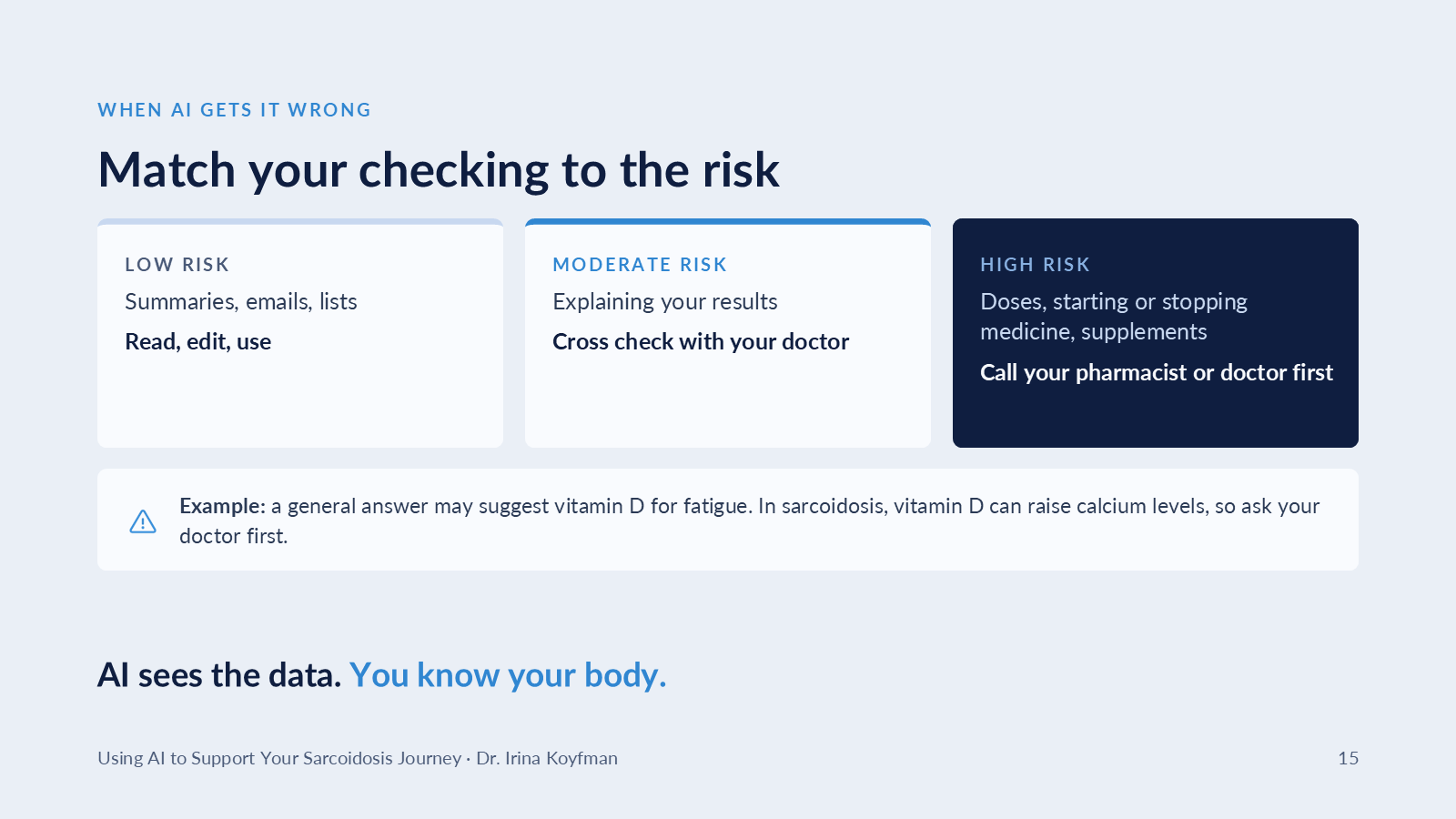
AI gets things wrong, sometimes in ways that look completely right. The rule is simple: the higher the stakes, the more you verify. A summary or an email, read it, fix it, use it.
An explanation of your results, check it with your doctor. Anything about a dose, starting or stopping a medicine, or a supplement, call your pharmacist or doctor first. Here is a sarcoidosis example.
Many general sources suggest vitamin D for tiredness. But in sarcoidosis, the granulomas can make extra active vitamin D, and supplements can push calcium too high. A generic answer would not know that about you.
AI can check the data. You can catch what the data does not show: how you feel, what changed, what does not fit. If an answer worries you, ask AI: answer as if your first answer was wrong, and what should I check?
Read the slide as text
- LOW RISK
- MODERATE RISK
- HIGH RISK
- Summaries, emails, lists
- Explaining your results
- Doses, starting or stopping medicine, supplements
- Read, edit, use
- Cross check with your doctor
- Call your pharmacist or doctor first
- Example: a general answer may suggest vitamin D for fatigue. In sarcoidosis, vitamin D can raise calcium levels, so ask your doctor first.
- AI sees the data. You know your body.
Tip: use the ← and → keys to move between slides.